Want to be in the loop?
subscribe to
our notification
Business News
LAW ON SPECIAL ECONOMIC ZONES REAGENT FOR REFORM
After more than one year the International Scientific Conference on Special Economic Zone Development - Experience and Opportunity was held in Quang Ninh province in March, 2014, a much-expected regulatory framework for a “not new” model has not take shape.
What model?
It is expected that the Law on Special Economic Zone would be soon drafted and ratified by the lawmaking National Assembly to lay the groundwork for the start of Van Don Special Economic Zone before the eighth meeting of the Central Party Committee (11th term) advocated forming three special economic zones
in three regions: Van Don (Quang Ninh), Bac Van Phong (Khanh Hoa) and Phu Quoc (Kien Giang). But, a few months later, at a meeting with relevant provinces on special economic zone construction, Prime Minister Nguyen Tan Dung concluded that this law needed to be delayed.
Recently, the draft Law on Local Government Organisation added more regulations on special administrative and economic unit set up by the National Assembly.
This unit is applied special economic and social regimes and has separately-organised governments. National Assembly Chairman Nguyen Sinh Hung said that there will be no general law for all special economic zones but each zone will have a law because it may have different policies because of terrain characteristics like mountainous region or coastal region. There is only one general regulation that special economic zones are set up by the National Assembly. They will have similar functions and tasks but have different mechanisms.
Indeed, the concept of special economic zone was not new in Vietnam. The Vung Tau - Con Dao Special Economic Zone was founded in 1979 but it was dissolved in 1991. The policy on special economic zone construction was also added to Constitution 1992 and reiterated in the Resolution of the midterm meeting of the Party Central Committee (7th term) in 1994. In more than 20 years, Vietnam has no special economic zone but it has established 15 coastal economic zones and 28 border gate economic zones.
In the world, approximately 4,000 economic zones have been established in 135 countries, generated over 68 million full-time jobs an attracted more than US$500 billion traded-related added value. Commonly, economic zones have clear geographical boundaries, are placed under the sovereignty of a country but have
relatively independent status in relation to the outside, have high autonomy, and have modern, free administrative and economic management mechanisms, and integrate deeply into world economies in order to create overpowering advantages.
That is reason why special economic zones are expected to leverage local and regional economic economies. However, according to statistics announced at the conference in Quang Ninh, nearly half of special economic zones in the world failed.
Jumping over hurdles
Successful and failed experiences in special economic zone development in the world, including the unsuccessful test with Vung Tau - Con Dao Special Economic Zone will be important foundations for Vietnam to establish a legal framework attractive enough to draw investors and create preconditions for the success of more special economic zones.
All provinces now propose policies beyond the law on tax incentives and infrastructure and ask for special power for the government of special zones. Core projects for special economic zones to draw investment capital like casino are also awaiting a new regulatory framework for special zones.
Andrew Grant, Director of McKinsey Singapore, said policies and institutions are important factors for a special economic zone. Professor Ha Ton Vinh, investment mentor for Quang Ninh province, said that “I met four of dollar billionaires and received their appreciation for special economic zones and casinos in Vietnam. However, to convince them, Vietnam must have very specific laws and decrees with clearly defined roadmaps of application. If Vietnam cannot introduce a legal framework, they will ignore.”
In fact, Vietnam has many favourable conditions to develop special economic zones, said Dr Vuong Dinh Hue, Head of Central Economic Committee. Vietnam is one of 10 countries in the world with the highest coast length index; thus, building some special economic zones to create growth poles and pilot institutions is a consistent policy of the Party and State of Vietnam.
In the waiting time, Van Don (Quang Ninh) and Phu Quoc (Kien Giang) are rushing to prepare necessary infrastructure conditions for the formation of future special economic zones like building airports, upgrading traffic systems and building casinos. But, the success of special economic zones depends heavily on the legal framework. Dr Tran Dinh Thien, Director of the Vietnam Institute of Economics, said "Special economic zone is a nest for phoenixes to lay eggs. If we build a nest for chickens, we cannot wait for phoenixes to spawn.”
Institutional change needed
Dr Vo Tri Thanh, Deputy Director of Central Institute for Economic Management (CIEM) We have many economic zones but we do not have any special economic zone in the true sense where institutions are expanded, liberalised, upgraded and facilitated to serve investors. To do that, we must endeavour to draw successful and failed experiences and lessons learned from countries that have developed special economic zones.
The world has some 3,500 special economic zones in 135 countries while Vietnam has now started to consider developing this sort of economic zones. The country needs to resist the appeal of well-reputed and very developed special economic zones in the region. Foregoers have certain advantages like easier investment attraction and less competitive pressures but latecomers also have their advantages like basing on lessons and experience of foregoers and holding unparalleled advantage s like geographic position.
To make a development shortcut, Vietnam must have institutional breakthrough. Economically, it must ensure free competition. Administratively, it must have the autonomy and self-responsibility. Most importantly, it is necessary to institutionalise administrative apparatus and facilitate production and business. Therefore, what investors and local governments expect is the Law on Special Economic Zone because no foreign investor will put billions of dollars without the highest legal basis to ensure the security of their money.
Specialists also warned against mistakes that may lead to the failure of special economic zones, including ‘achievement disease’, shyness of venture, and policy inconsistencies.
In that context, the comprehensive change in mindset and the construction of legal framework for special economic zones according to the Law on Special Economic Zone is a prerequisite to create breakthroughs. But, it is challenging to ensure the reform beyond socialist-oriented market economy when this law is drafted.
It is time we looked at investment quality rather than offer ‘unlimited’ incentives for investors because we need investment money.
Putting public - private interests into consideration
Mr Vo Dai Luoc - Former Director of the Institute of World Economics and Politics (IWEP)
The formation of economic zones with competitive economic institutions in the midst of unpredictable economic conditions and development events is a groundbreaking, determined work. From researches on successful cases in the world, Vietnam need to pay attention to following issues when it establishes and
operates economic zones at the present and in the future:
Firstly, it needs to form free economic zones to draw big businesses to come and operate in the context of globalisation.
Secondly, economic zones in general and free economic zones in particular focus on fully exploiting their strengths, especially geographical location, economic and social conditions, etc.
Thirdly, successful economic zones share following features: Modern institutions, application of international laws, diversified and highly-concentrated resource development, short construction time, and strong appeal to world-leading corporations.
The Government of Vietnam must invite strategic investors to come and listen to what they want from special economic zones in Vietnam. The feasibility of special zones must be based on the needs of investors, not from the political will of the Government. If the Government introduces policies to encourage investors to put their money in infrastructure development, the success of special economic zones will be more secure because investors will be more responsible with the development of special economic zones invested by their money. In Malaysia, public-private forums are held regularly between the Government and investors to learn about investors’ demands and public-private investment sharing out. This is a good lesson for Vietnam to build special economic zones.
Source: VCCI
Related News

INFRASTRUCTURE / CONSTRUCTION / LOGISTIC / PORT
VIỆT NAM-CAMBODIA TRADE GATHERS PACE TOWARDS $20 BILLION TARGET
Trade between Việt Nam and Cambodia continues to grow, remaining a bright spot and a key pillar of bilateral cooperation as the two countries aim to raise two-way trade to US$20 billion in the coming years. After setting a record of more than $11.3 billion last year, bilateral trade reached about $8.7 billion in the first eight months of this year, up 8.3 per cent year on year.
TECHNOLOGY
AI BEGINNING TO RESHAPE RECRUITMENT CRITERIA
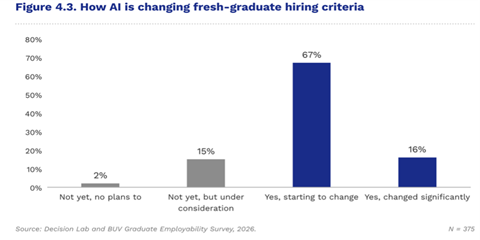
Digital literacy is the only capability area in which fresh graduates meet employers’ expectations, according to a new report. Yet, it is also the standard rising fastest, as businesses increasingly expect new hires to use AI effectively in the workplace. Some 83 per cent of employers say AI has changed, or is beginning to change, their hiring criteria, while 94 per cent report higher expectations for digital and AI capabilities than they had two to three years ago.

INFRASTRUCTURE / CONSTRUCTION / LOGISTIC / PORT
ĐÀ NẴNG GREEN-LIGHTS US$105 MILLION THAI DEVELOPMENT DEAL
The central city has approved an investment proposal by Thailand’s WHA Group to develop infrastructure for the 400ha WHA Đà Nẵng Industrial Park project on two communes of Thăng Bình and Đồng Dương, with an investment of more than VNĐ2.7 trillion (US$105 million). The city said it approved WHA Industrial Development International's status as an investor in the project, which is expected to take place between 2027 and 2034.

VIETNAM ECONOMY INVESTMENT
MOBILE PHONE EXPORTS RISE 20% TO $51.8 BILLION IN FIRST NINE MONTHS
Exports of mobile phones and components rose 20 per cent year-on-year to nearly US$51.8 billion in the first nine months of 2026, with China, the US and Republic of Korea accounting for more than half of the total. Shipments to the three markets reached a combined $26.18 billion, or 50.6 per cent of total exports of the product group during the period, according to data from the Vietnam Department of Customs under the Ministry of Finance.

VIETNAM ECONOMY INVESTMENT
FRUIT AND VEGETABLE EXPORTS POISED TO HIT $10 BILLION IN 2026
Fruit and vegetable exports are on track to reach nearly US$10 billion in 2026, after rising 19.9 per cent year on year to nearly US$7.4 billion in the first nine months, driven by strong seasonal demand and abundant tropical fruit supplies. The Ministry of Agriculture and Environment said the growth reflected stronger international demand for fresh produce and processed agricultural products.
GARMENT / TEXTILE
TEXTILE EXPORTS FACE DUAL CHALLENGES OF SUSTAINING ORDERS AND BOOSTING EFFICIENCY AMID GROWING COMPETITION
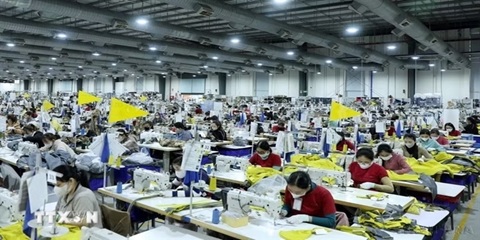
Data shows that the textile and garment sector maintained its growth momentum in the first nine months of this year. The industry's total export turnover reached an estimated US$35.721 billion in the first nine months of this year, up 3.3 per cent year-on-year. Despite posting encouraging export figures, Vietnamese textile and garment enterprises continue to navigate unpredictable market variables.
Events Sponsors






















